
- According to the story, that was the number the mother wanted tattooed on her wrist. She explained to the tattoo artist that she wanted to always remember that her daughter lived, tried hard to stay clean, and succeeded for 392 days before addiction took her life. Too many, she acknowledged, would focus on the fact that her daughter had died due to an overdose. She wanted to remember that her daughter had done the work, made the effort, and been in recovery for 392 days. She wanted to forever honour that part of her daughter’s journey.
As she left, she asked the tattoo artist to post the stencil and offer the opportunity for others to do the same. The artist framed the stencil and offered free tattoos to remember the journeys, and successes of staying clean and sober. The stories that followed offered glimpses of hope and resilience in the face of destructive illness. Each number became a reminder of lives lived, and struggles endured.
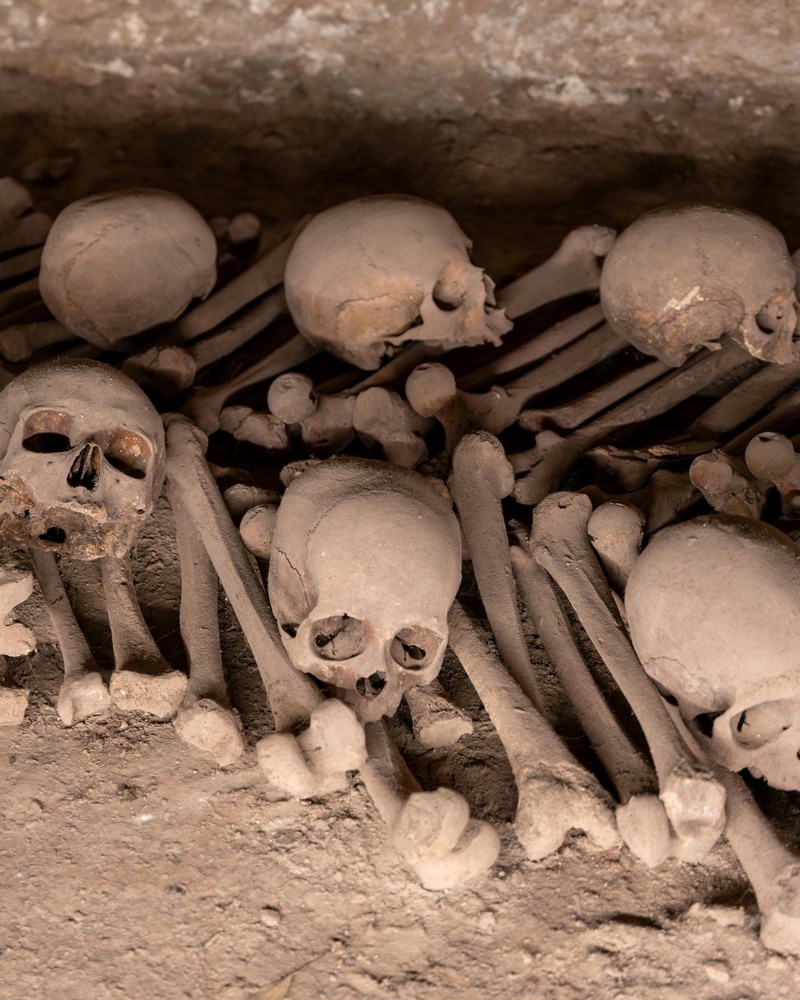
(God) said to me, "Mortal, can these bones live?" I answered, "O Lord God, you know."
Mortal, can these bones live? Faced with a valley of bones, it would have been easier for Ezekiel to assume that he was surrounded by death than to consider the possibility of life. We do that in other circumstances too – with illness, addiction which is, in itself an illness, poverty, war, racism, environmental destruction, homophobia, transphobia, sexism, the future of the church. It is easy to fall into negativity, to assume there is no life.
It is easy to get caught up in fatalism, to assume there is nothing we can do. While sometimes there are limits to what we can do, we can’t, for example, do much to stop a war, does that mean we are absolutely helpless? Should we give in to hopelessness and fatalism?
Mortal, can these bones live? Can this world be a better place than it is? Is there a space for hope in our world? What would hope look like? What does hope look like in this moment, at this time? Mortal, can these bones live?
Hope is a choice. We can choose to believe that a better world is possible. We can choose to prophesy to the bones, to those things that feel hopeless and dead in this world and reveal new life. AND we can choose to act in ways that show we believe in that new life. We don’t have to make huge changes to make a difference. We can do little things, hopeful things that matter. What are some things that we can do to make a difference, to be hopeful right now?
Examples:
- Boycotts
- Planting native
- Recyclable and compostable containers for take out meals
- Flags of support
- Prayers and worship services in support of communities and those who are struggling
- Sharing faith and inviting people to church
(God) said to me, "Mortal, can these bones live?" I answered, "O Lord God, you know."
The story from Ezekiel ends with bones transformed into a vast multitude filled with life. It is a metaphor for what God promises to do in Israel. Indeed, it is a metaphor for how God working in and through humanity can do infinitely more than we can ask or imagine. God, in Jesus has shown us how love matters and can transform hearts. May this love move in our hearts and fill our spirits transforming us so that we choose hope, in the ways we act and live in this world today, tomorrow, and into the future. This we pray as we sing: (VT) 789 Be a Sower