What does it mean to be Christian? What aspects define us as Christians, as Anglicans in this moment, in this place?
How much of our understanding of what it means to be Christian, what it means to be Anglican, is based in what we do in this space, in our Church buildings, on Sunday mornings? How do we think this expression of faith has evolved?
In the reading from the Acts of the Apostles today it says: All these were constantly devoting themselves to prayer. In the beginning, prayers and practices were heavily based in the Jewish tradition, that is what was most familiar. Folks built a specifically Christian practice on the ‘eighth’ day – what we call Sunday to coincide with the day of resurrection which also allowed people to continue to honour the Sabbath, Saturday.
As folks gathered, they began to develop patterns for that gathering. Some of what they did naturally mimicked that to which they were accustomed. The reading of scripture and offering of a sermon would feel natural. The inclusion of some sort of prayers was a familiar custom for Jewish people. They would also want symbolic ways to embody their commitment to follow Jesus and their evolving understanding of who he is.
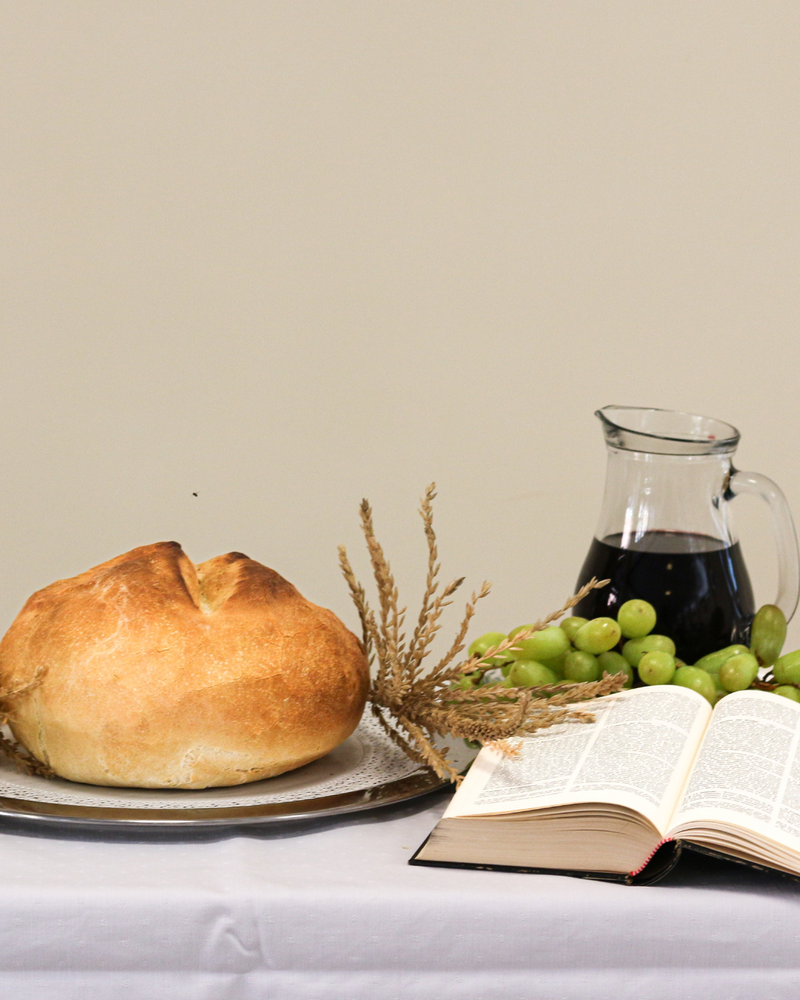
The crucifixion and resurrection changed the relationship between humanity and Jesus. This isn’t something easily reenacted. On the night before he died, however, Jesus gave us a tangible way to remember this story, the Last Supper when, in bread and wine transformed into body and blood, he offered us a sacrament, an outward and visible sign of the inward grace given through his death and resurrection.
The prayers we use to articulate the sacrament of Holy Communion have evolved over time and continue to evolve based in context and culture. There are some similarities in form:
- most begin the same or a similar way, with what is called the sersum corda or the Lord be with you, a greeting and invitation to the congregation
- this is often followed by an expression of gratitude and/or reasons why God should be glorified that can include references to biblical stories and culminates in the sanctus or holy, holy, holy
- the language then shifts to Jesus and includes some version of the words of institution, the language from the Last Supper:
- he took bread, blessed it, gave it, said take and eat
- he took the cup, blessed it, gave it, said take and drink
- do this in memory of me
- there is usually some epiclesis, the request to send the Holy Spirit to sanctify or make holy the bread and wine, and the Church
- and then there is the conclusion which leads to a great Amen said by the people.
There are variations, so we use different Eucharistic prayers during different seasons. Through the Easter season we have been using the prayer that most closely resembles the form used in the early Church to coincide with our sermon theme. You may remember the heavily creation themed one that references stars and galaxies and planets that we often use during the Season of Creation. Or the one that references Hagar, Joseph, and Babylon that we have used in the summer when we are reading some of these parallel Hebrew Testament stories.
The inclusion of Holy Communion in worship transformed the early church gatherings, and our gatherings into something specifically Christian. Every time bread is taken, blessed, broken, and shared, every time wine is taken, blessed, poured, and shared, we are making visible that what we are doing is about Jesus, his life, death, and resurrection. Nourished by this meal, we can allow Jesus to feed all other aspects of our lives too, just as those in the early church sought to do, not perfectly, as best as we are able. The ‘not perfectly’ part is why our Baptismal covenant continues to include as a response, “I will, with God’s help.”
So, as we gather at the table today like Christians have done for millennia, may our worship turn to witness revealing for this generation the hope that is grounded in our faith in the One whose life, death, and resurrection continues to touch and transform our hearts today. This we pray as we sing: 61 As We Gather at Your Table